In commercial properties, office buildings and industrial halls, heating is one of the largest operating costs. Heating usually keeps the spaces at operating temperature around the clock, even though the use of the spaces changes from day to day. Voltria's Intelligence controls heating based on the actual temperature and use of each space, through your existing building automation. The property owner makes no investment.
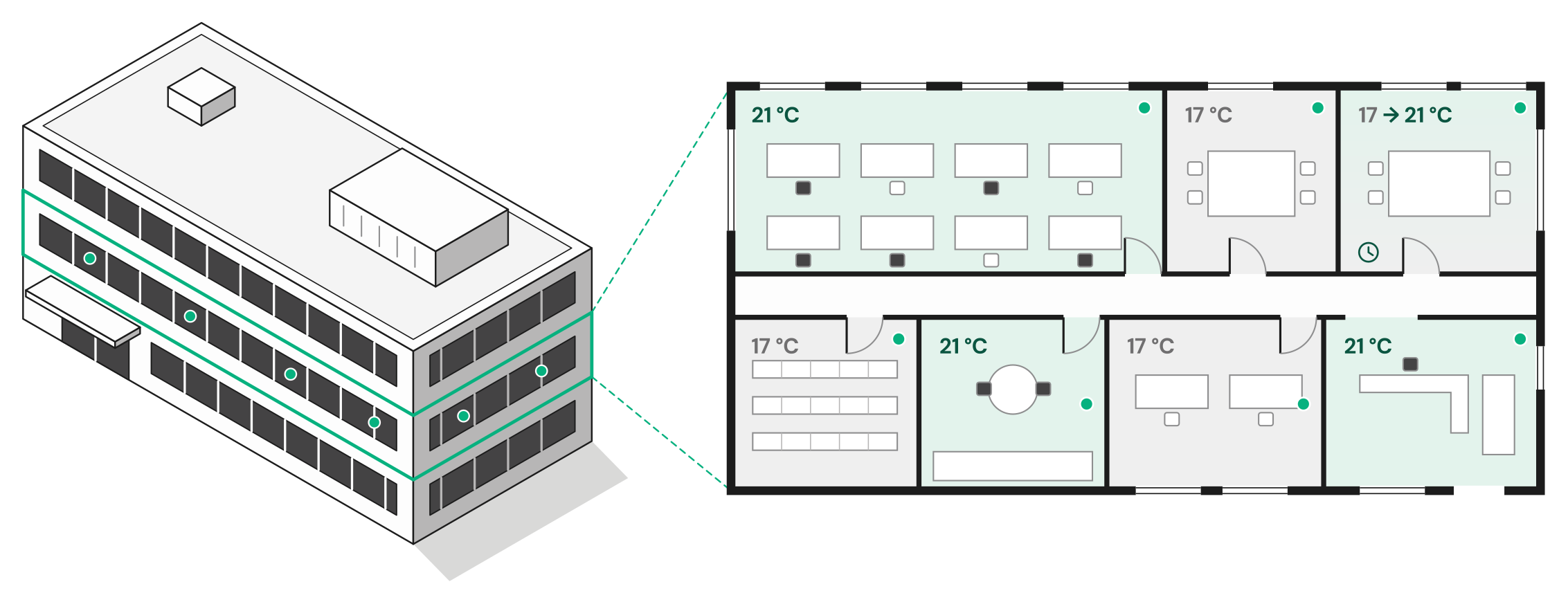
In most commercial properties, heating keeps the spaces at operating temperature around the clock, including nights and weekends. Meeting rooms, storage areas, underused floors and vacant rental space are heated to operating temperature even when nobody is there. At the same time, some spaces run warmer than they need to, because control is based on the outdoor temperature rather than the actual temperature indoors.
Both show up directly in the heating bill. Neither is visible without measurement.
Sensors show the real situation
Wireless temperature and occupancy sensors are installed in the spaces. They show how warm the spaces really are and when they are in use.
Heating to actual need
Heating is adjusted based on measured indoor temperatures, so overheating disappears and temperature differences between spaces even out.
No heating empty spaces for nothing
When a space is empty, its temperature is lowered through the zone control of your building automation. Before the space is used again, the temperature is raised back, so it is already at operating temperature when people arrive.
For commercial property owners, a key question is what happens to the existing building automation. The answer: it stays, and it is put to use.
Space-level sensors
Wireless temperature and occupancy sensors
Voltria control
Calculates space-level setpoints from temperature and use
Existing building automation
E.g. Fidelix, Ouman, Siemens. Controls the zones as before.
Stays
Voltria's control connects to the property's existing automation. Space-level control is carried out through its zones. Integration with Fidelix-based systems is possible, as it is with many other common controllers such as Ouman and Siemens. The automation keeps working normally and the work of the maintenance company or automation supplier does not change.
During the site survey we go through which spaces and zones the existing automation can control. If the property has a controller that cannot be connected to, it is replaced. The replacement is included in the service price. Its effect on the share paid from savings during the contract period is shown in the quote.

Wireless temperature and occupancy sensors, installed
Intelligent control that adjusts heating to the actual temperature and use of each space
Integration with your existing building automation
An online portal showing current and past temperatures of the spaces
Alerts, for example for windows left open and abnormal temperatures
Continuous monitoring, maintenance and savings reporting for the property owner
Voltria is responsible for the equipment, installation and maintenance for the entire contract period. The property owner makes no investment and ties up no capital.
Savings guarantee
If there are no savings, the service is not billed.
Fixed monthly fee
The fee is based on the annual savings forecast and settled once a year against realised savings. It can be budgeted like any other operating cost of the property.
Five-year contract period
The equipment is paid for from the savings during the contract period. Part of the savings stays with the property from the start.
The model also suits property investors and portfolios well: the savings show directly in net operating income without a long-term investment.
1
Savings estimate
You provide the district heating consumption data and details of the current automation and the usage hours of the spaces. We prepare a free estimate of the savings potential.
2
Site survey
We go through the heat distribution room, the zones of the building automation and the placement of the sensors.
3
Quote and contract
The quote includes the savings forecast, the monthly fee and the share that stays with the property.
4
Installation and commissioning
The work is done without disrupting the use of the property and without a heating interruption.
5
Monitoring
Savings and indoor temperatures are reported regularly.
If you manage a commercial property or a property portfolio whose heating costs you want to bring under control without investment, request a quote. To get started, all we need is the past year's district heating consumption data and details of your current building automation.